Zarmed University Health Home

Category

Medical Education

29 articles

Competence Without Consultation: Why Medical Training Must Teach Physicians to Know the Limits of Their Own Knowledge

Competence Without Consultation: Why Medical Training Must Teach Physicians to Know the Limits of Their Own Knowledge

Medical training is designed to produce physicians who can act decisively under uncertainty — but that same training often fails to teach when decisiveness should yield to consultation. Intellectual humility, the capacity to recognize the boundaries of one's own expertise and seek guidance accordingly, is not a personality trait. It is a clinical skill, and it belongs in every medical curriculum.

Graduates Speak, Schools Don't Listen: The Case for Closing the Feedback Loop in Medical Education

Graduates Speak, Schools Don't Listen: The Case for Closing the Feedback Loop in Medical Education

Medical schools invest enormous resources in designing curricula, yet they rarely ask the people best positioned to evaluate that education — their own graduates. A growing body of evidence suggests that the gap between what physicians are taught and what they actually need in practice is widening, and the absence of structured post-graduation feedback mechanisms is a primary reason why.

The Physician Who Cannot Decline: Why Medical Schools Must Teach the Art of Saying No

The Physician Who Cannot Decline: Why Medical Schools Must Teach the Art of Saying No

Medical training systematically rewards availability and self-sacrifice while leaving students without the skills to set professional limits. The resulting deficit follows physicians into practice, where overcommitment quietly erodes both personal well-being and the quality of care they deliver. This article examines what a curriculum built around sustainable professional boundaries might look like—and why American medical schools have been slow to build one.

Graduating Into the Unknown: Why American Medical Schools Must Teach the Business Behind the Practice

Graduating Into the Unknown: Why American Medical Schools Must Teach the Business Behind the Practice

Medical schools invest years cultivating clinical excellence in their graduates, yet consistently fail to equip those same graduates with the foundational business knowledge required to sustain a career in modern American healthcare. The result is a generation of early-career physicians who are scientifically prepared but professionally adrift. This article examines the structural roots of that gap and outlines what a meaningful business literacy curriculum in medicine would look like.

Thinking About Thinking: Why Medical Education Must Teach Physicians to Audit Their Own Minds

Thinking About Thinking: Why Medical Education Must Teach Physicians to Audit Their Own Minds

Medical schools invest heavily in teaching students to recognize errors in clinical reasoning — yet the physician's own mind remains the least examined diagnostic instrument in the room. This article explores the growing movement to embed metacognitive training and bias literacy into medical curricula, arguing that self-awareness about one's own judgment is not a soft skill but a patient safety imperative.

Molecules Over Meaning: How Medical Schools Are Failing to Teach the Conditions That Make People Sick

Molecules Over Meaning: How Medical Schools Are Failing to Teach the Conditions That Make People Sick

American medical schools invest heavily in teaching the biological machinery of disease while giving comparatively little attention to the social, economic, and environmental circumstances that drive illness in the first place. This structural imbalance produces physicians who can name every enzyme in a metabolic pathway but struggle to recognize when a patient's zip code is the most dangerous variable in their chart. Zarmed University Health examines why integrating social determinants of healt

The Default Patient: How Medical Curricula's Invisible Assumptions Are Producing Physicians With Preventable Blind Spots

The Default Patient: How Medical Curricula's Invisible Assumptions Are Producing Physicians With Preventable Blind Spots

The clinical vignettes and case studies embedded throughout American medical training quietly encode assumptions about who the "typical" patient is — and those assumptions carry serious consequences. When certain populations are systematically underrepresented in teaching materials, the physicians trained on those materials enter practice with gaps in pattern recognition that real patients will eventually expose. This article examines how medical education can confront representational bias at i

Fluent in Rare Diseases, Silent on Depression: The Mental Health Training Deficit in American Medical Education

Fluent in Rare Diseases, Silent on Depression: The Mental Health Training Deficit in American Medical Education

Medical students can identify the hallmarks of Wilson's disease or describe the enzymatic cascade of a rare metabolic disorder, yet many graduate without the tools to confidently screen a patient for major depressive disorder. The gap between what physicians are taught and what they will actually encounter in daily practice has never been more consequential. This article examines why psychiatric literacy remains underprioritized in American medical schools and what a reformed curriculum must inc

Hidden in Plain Sight: Why Medical Training Leaves Physicians Defenseless Against Workplace Abuse

Hidden in Plain Sight: Why Medical Training Leaves Physicians Defenseless Against Workplace Abuse

Workplace bullying and hierarchical abuse are well-documented features of medical training environments, yet most residency and fellowship programs offer no formal instruction on how to recognize, report, or recover from them. This investigative piece examines the systemic curricular gap that leaves physicians psychologically exposed and proposes concrete educational interventions drawn from evidence across multiple industries.

Woven Into the Fabric: Why Health Equity and Reproductive Justice Belong in Every Medical Classroom From the Start

Woven Into the Fabric: Why Health Equity and Reproductive Justice Belong in Every Medical Classroom From the Start

American medical schools have long treated health equity as an optional module rather than a foundational clinical discipline. This article examines how embedding reproductive justice and structural health principles into core coursework—from anatomy to pharmacology—produces more competent, more effective physicians and directly improves patient outcomes across underserved populations.

Alone in the Ward: Why Medical Education Must Prioritize Professional Belonging Over Transactional Networking

Alone in the Ward: Why Medical Education Must Prioritize Professional Belonging Over Transactional Networking

Despite spending years surrounded by colleagues, many physicians report profound professional isolation—a paradox rooted in how medical training is structured from the earliest stages. This article examines how the individualistic, hierarchical design of American medical education systematically undermines genuine community-building, and why forward-thinking institutions are treating professional belonging as a clinical competency rather than a personal luxury.

Sorry Seems to Be the Hardest Word: How Medical Education Fails Physicians When Mistakes Happen

Sorry Seems to Be the Hardest Word: How Medical Education Fails Physicians When Mistakes Happen

Medical schools invest enormous resources in teaching students how to prevent errors, yet almost none of that investment extends to what happens after a mistake occurs. The absence of formal training in error disclosure leaves physicians unprepared to communicate honestly with patients, protect their own wellbeing, and navigate the institutional pressures that follow a clinical misstep. This article examines why accountability must become a teachable skill.

Teaching Medicine Without Teaching Dying: The Case for Mandatory Palliative Care in Medical Curricula

Teaching Medicine Without Teaching Dying: The Case for Mandatory Palliative Care in Medical Curricula

American medical schools have long prioritized the science of curing over the art of caring for patients who cannot be cured. As palliative care continues to be sidelined into optional coursework, graduating physicians enter clinical practice underprepared for one of medicine's most demanding and consequential responsibilities. A structural rethinking of how and when palliative principles are taught is long overdue.

Prepared for the Textbook, Unprepared for the Office: The Unfinished Work of American Medical Education

Prepared for the Textbook, Unprepared for the Office: The Unfinished Work of American Medical Education

American medical schools have long excelled at producing graduates who can name a rare autoimmune condition but struggle to navigate a prior authorization denial on their first day of independent practice. The gap between academic preparation and clinical reality is not a minor inconvenience — it is a structural failure with measurable consequences for physicians and the patients they serve. This article examines what is missing from the curriculum and what a more complete medical education migh

The Education That Never Happened: Making the Case for Financial Literacy in Medical Training

The Education That Never Happened: Making the Case for Financial Literacy in Medical Training

Medical schools invest years developing diagnostic acumen, clinical reasoning, and procedural skill in their graduates — yet leave them entirely unprepared for the financial realities that will define much of their professional lives. From six-figure student debt to practice ownership decisions and retirement planning, physicians routinely enter the workforce without the foundational knowledge to make sound financial choices. This gap in medical education carries measurable consequences for care

Caring at Scale: How Efficiency-Driven Medical Training Is Quietly Eroding the Doctor-Patient Relationship

Caring at Scale: How Efficiency-Driven Medical Training Is Quietly Eroding the Doctor-Patient Relationship

Modern medical education champions compassion in its mission statements while simultaneously structuring training environments that reward speed, throughput, and emotional distance. A growing body of evidence suggests that the volume-based architecture of clinical training is conditioning physicians to depersonalize patient encounters not out of indifference, but as an unconscious survival strategy. Understanding this paradox may be one of the most urgent challenges facing American medical educa

Rewarding the Wrong Virtue: How Medical Schools Mistake Confidence for Competence

Rewarding the Wrong Virtue: How Medical Schools Mistake Confidence for Competence

Medical training in the United States has long celebrated the decisive, unshakeable clinician — yet mounting evidence suggests that intellectual humility and a measured comfort with uncertainty are among the strongest predictors of diagnostic accuracy and patient safety. This article examines how assessment structures, clinical culture, and institutional expectations quietly penalize the very hesitation that good medicine often demands, and what forward-looking programs are doing to change that.

Built to Win, Trained to Lose: How Medical Education's Competitive Architecture Undermines the Collaborative Physician

Built to Win, Trained to Lose: How Medical Education's Competitive Architecture Undermines the Collaborative Physician

Medical schools profess a commitment to teamwork, yet their foundational structures—graded curves, class rankings, and individual performance metrics—quietly cultivate a culture of competition that follows physicians into clinical practice. This tension between what institutions say and what they reward constitutes a hidden curriculum with measurable consequences for patient care. Understanding how that curriculum operates is the first step toward dismantling it.

Trained to Be Certain: How Competency Frameworks Are Producing Physicians Ill-Equipped for the Unknowable

Trained to Be Certain: How Competency Frameworks Are Producing Physicians Ill-Equipped for the Unknowable

Medical schools across the United States have invested heavily in competency-based education, producing graduates who can demonstrate mastery across defined clinical domains. Yet a growing body of evidence suggests these same physicians falter when the clinical picture refuses to conform to a textbook framework. This article examines why tolerance for uncertainty must move from the margins of medical training to its very center.

Depth Without Breadth: How Hyper-Specialization in Medical Training Is Leaving Whole Patients Behind

Depth Without Breadth: How Hyper-Specialization in Medical Training Is Leaving Whole Patients Behind

As medical training in the United States continues its march toward ever-narrower specialization, a growing number of educators are raising an urgent question: are physicians graduating with the clinical breadth necessary to manage patients whose conditions do not fit neatly into a single specialty? This article examines the structural tensions within modern medical curricula and explores how institutions might reconcile deep expertise with integrative, whole-patient thinking.

When the First Impression Becomes the Final Answer: Rethinking How Medical Education Addresses Diagnostic Bias

When the First Impression Becomes the Final Answer: Rethinking How Medical Education Addresses Diagnostic Bias

Medical training excels at teaching physicians to recognize patterns, yet rarely instructs them to systematically dismantle the very conclusions those patterns suggest. Confirmation bias — the tendency to favor information that supports an initial hypothesis — remains one of the most underaddressed cognitive hazards in American medical education. This article examines how curriculum design can either perpetuate or correct this dangerous blind spot.

Unlearning by Design: How Medical Programs Are Training Physicians to Question What They Were Taught

Unlearning by Design: How Medical Programs Are Training Physicians to Question What They Were Taught

Medical education has long rewarded the mastery of established knowledge, but an emerging cohort of institutions is asking a harder question: what happens when that knowledge is wrong? This article examines how forward-thinking programs across the United States are embedding evidence-based skepticism into their training culture, equipping future physicians to challenge inherited clinical practices with rigor, respect, and purpose.

Knowing Is Not Enough: Why Medical Training Must Teach Physicians to Trust Their Own Judgment

Knowing Is Not Enough: Why Medical Training Must Teach Physicians to Trust Their Own Judgment

Medical schools have grown remarkably effective at producing graduates who can recall diagnostic criteria and recite treatment protocols with precision. Yet a troubling pattern persists in residency programs across the country: trainees who perform brilliantly on written assessments frequently hesitate, defer, and second-guess themselves when real patients require real decisions. Closing this gap demands a fundamental rethinking of how medical education develops not just competence, but clinical

Lost in Translation: The Hidden Cost of Poor Communication Between Physicians and Nursing Staff

Lost in Translation: The Hidden Cost of Poor Communication Between Physicians and Nursing Staff

Despite decades of interprofessional education initiatives, communication breakdowns between physicians, nurses, and allied health professionals remain one of the leading contributors to preventable medical errors in US hospitals. This article examines why conventional teamwork training repeatedly falls short in high-pressure clinical environments and highlights the simulation-based and protocol-driven models that are genuinely changing outcomes. Understanding where education has failed is the f

Wellness as a Core Competency: How Medical Schools Are Rewriting the Rules of Physician Training

Wellness as a Core Competency: How Medical Schools Are Rewriting the Rules of Physician Training

A growing number of US medical schools are embedding structured wellness education directly into their core curricula, treating physician wellbeing not as an elective concern but as a foundational clinical skill. Evidence suggests this shift is improving student retention, reducing attrition, and producing physicians better equipped to sustain long careers. This article examines the institutions leading the transformation and the frameworks others can adopt.

From Cadavers to Code: How AI and Simulation Are Redefining Clinical Skill Development

From Cadavers to Code: How AI and Simulation Are Redefining Clinical Skill Development

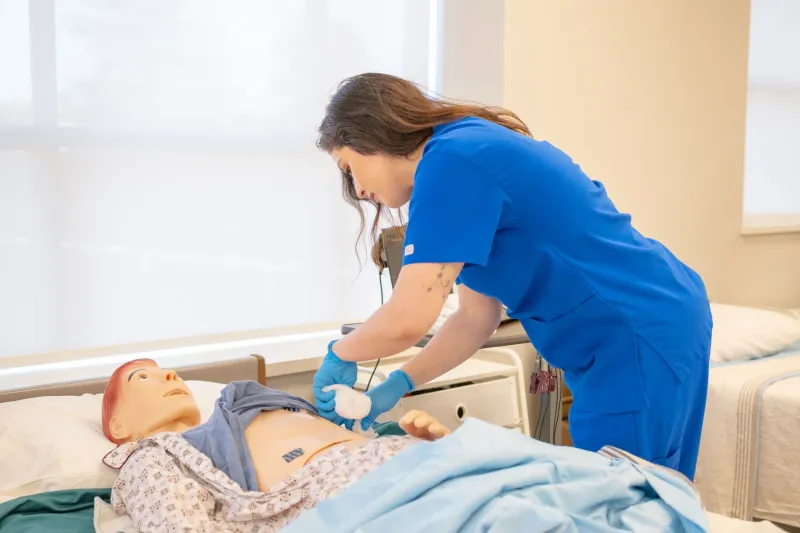
Artificial intelligence and high-fidelity simulation are no longer experimental additions to medical curricula — they are rapidly becoming foundational pillars of clinical training in the United States. This article examines how these technologies are transforming the way future physicians learn, practice, and are assessed, while raising important questions about preserving the human dimensions of medicine. Educators and trainees alike must understand both the promise and the complexity of this

Bridging the Divide: How Forward-Thinking Medical Schools Are Closing the Rural Health Education Gap

Bridging the Divide: How Forward-Thinking Medical Schools Are Closing the Rural Health Education Gap

Millions of Americans living in rural and underserved communities face a persistent shortage of qualified physicians, a crisis rooted in part within the walls of medical school classrooms. Zarmed University Health examines how innovative training models, rural immersion programs, and mentorship pipelines are reshaping medical education to meet this urgent national need. The transformation of how physicians are trained may hold the key to reversing decades of healthcare inequity.